
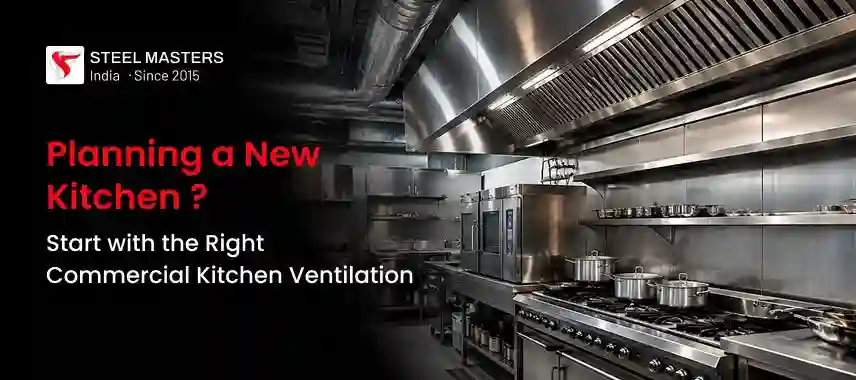
Planning a new commercial kitchen involves much more than selecting cooking equipment and deciding where each workstation will be placed. One of the most important decisions is choosing the right Commercial Kitchen Ventilation from the start. A well-planned ventilation system helps remove heat, smoke, steam, grease, and cooking odours, creating a cleaner, more comfortable workspace for kitchen staff. Whether you are opening a restaurant, hotel, cloud kitchen, bakery, hospital kitchen, or institutional food facility, starting with the right ventilation plan can help avoid expensive changes later and support smooth daily kitchen operations.
Why Commercial Kitchen Ventilation Matters Before Anything Else
Many business owners focus first on ovens, cooking ranges, refrigerators, and food-preparation equipment. While these items are important, they cannot perform well if the kitchen has poor airflow. In busy cooking areas, heat, smoke, and grease quickly build up, making the environment uncomfortable and difficult to manage.
A properly designed ventilation system removes stale air while allowing fresh air to enter the kitchen. This balance helps staff work in better conditions and reduces the likelihood of grease accumulating on walls, ceilings, and equipment.
Planning ventilation before construction begins also helps architects, consultants, and kitchen designers place equipment in suitable locations, avoiding major changes after installation.
A well-planned Commercial Kitchen Exhaust System also supports smoother operations by removing cooking fumes before they spread throughout the kitchen.
Common Problems Caused by Poor Ventilation
Many commercial kitchens face similar problems when ventilation is not given sufficient attention during the planning stage.
One of the biggest concerns is excessive heat. Commercial cooking equipment runs for long hours and generates a significant amount of heat. Without proper airflow, temperatures continue to rise, making the kitchen uncomfortable for employees.
Smoke is another common issue. Grills, fryers, tandoors, and cooking ranges emit smoke throughout the day. If this smoke is not removed promptly, it reduces visibility and creates an unpleasant working atmosphere.
Grease particles also travel through the air while cooking. Over time, they settle on walls, ceilings, lighting fixtures, and equipment. Regular cleaning becomes more difficult, and grease build-up may increase fire risk.
Strong cooking odours can spread into customer dining areas, reception areas, and nearby offices if the ventilation system is not properly designed.
Poor ventilation may also force cooling equipment to work harder due to rising indoor temperatures, increasing operating expenses over time.
Understanding Commercial Kitchen Ventilation
Commercial kitchens produce varying amounts of smoke, steam, grease, and heat depending on the type of food being prepared. Commercial Kitchen Ventilation is designed to remove contaminated air from the cooking area and replace it with fresh air, keeping the kitchen comfortable and suitable for daily operations.
A complete ventilation setup typically comprises several components that work together. These include exhaust hoods, ductwork, filters, exhaust fans, fresh-air units, and make-up air systems. Each component plays a key role in maintaining balanced airflow throughout the kitchen.
Rather than treating ventilation as a separate installation, it should be planned in tandem with electrical work, plumbing, gas pipelines, drainage, and equipment placement.
Choosing the Right Kitchen Exhaust Hood
A Kitchen Exhaust Hood is one of the most important components of any commercial kitchen. It is installed directly above cooking equipment to capture smoke, steam, grease particles, and cooking fumes before they spread throughout the kitchen.
Different kitchens require different hood designs depending on the cooking equipment used.
Wall-mounted hoods are commonly installed above cooking ranges mounted against walls. Island hoods are suitable for cooking stations positioned in the centre of the kitchen. Condensate hoods are generally used above equipment that primarily produces steam, such as dishwashers and steam kettles.
Selecting the correct hood size is equally important. A hood that is too small may fail to capture all cooking emissions, while an oversized hood can increase installation and operating costs without delivering any additional benefits.
The hood should also be positioned at the correct height to ensure proper coverage over the cooking equipment.
Planning a Commercial Kitchen Ventilation System Around Your Kitchen Layout
Every kitchen has different operational requirements, which is why a Commercial Kitchen Ventilation System should always be designed to suit the available space and cooking style.
Several factors influence the overall design, including:
- Kitchen size
- Ceiling height
- Number of cooking stations
- Type of cooking equipment
- Daily food production
- Available wall space
- Future expansion plans
Restaurants serving grilled food require different airflow compared to bakeries or cafés. Similarly, hotel kitchens that prepare hundreds of meals each day require greater ventilation capacity than smaller food outlets.
Proper planning also helps reduce unnecessary duct lengths, improving airflow efficiency and simplifying future maintenance.
Selecting Ventilation Based on Cooking Equipment
Every type of cooking equipment produces different levels of heat, grease, smoke, and steam. This is why ventilation should always match the cooking process rather than follow a standard design.
Deep fryers generate grease particles that require continuous extraction. Charcoal grills produce smoke that needs high-capacity exhaust. Tandoors generate intense heat, while steamers release large amounts of moisture into the air.
When these appliances operate together, the ventilation design becomes even more critical.
Professional kitchen planners usually calculate airflow after reviewing the complete equipment list rather than estimating ventilation capacity.
This method helps maintain balanced airflow across the cooking line while reducing unnecessary energy consumption.
Why Restaurant Kitchen Ventilation Should Never Be an Afterthought
A busy food service business depends on consistency. Poor airflow can affect employee comfort, increase cleaning requirements, and create maintenance challenges over time.
Proper Restaurant Kitchen Ventilation helps maintain a cleaner cooking environment throughout operating hours. Staff can work more comfortably, while smoke and cooking odours remain under control.
Restaurant owners also benefit from improved kitchen organisation because ventilation equipment is planned alongside the cooking line rather than added after construction is complete.
Careful planning during the design stage also reduces the likelihood of expensive structural changes once the kitchen becomes operational.
Why Fresh Air Supply Is Just as Important as Exhaust
Many people think removing hot air is enough, but every commercial kitchen also needs a proper supply of fresh air. As the exhaust system removes smoke, heat, and grease-laden air, fresh air must enter the kitchen to replace it.
Without replacement air, the kitchen may develop negative air pressure. This can make doors difficult to open, reduce the performance of exhaust equipment, and affect gas-burning appliances.
A balanced airflow keeps the kitchen comfortable and ensures the ventilation equipment performs as intended throughout the day.
Planning Ductwork for Better Airflow
The performance of a ventilation setup depends not only on fans and hoods but also on the ductwork that connects the entire system.
Long duct routes with unnecessary bends can reduce airflow and increase maintenance needs. Proper duct planning allows smoke and grease-laden air to move smoothly towards the exhaust point.
The duct system should also provide access for regular cleaning because grease naturally accumulates inside ducts over time.
Good duct planning during construction saves both time and future maintenance costs.
Why Commercial Kitchen Ventilation Is Important for Fire Safety
Fire safety is one of the primary reasons to invest in proper Commercial Kitchen Ventilation. Commercial kitchens operate at high temperatures every day, and grease particles released during cooking can accumulate inside hoods and ducts if regular cleaning is ignored.
A properly designed ventilation setup helps reduce grease accumulation by removing airborne grease before it settles within the system.
Many commercial kitchens also use grease filters and fire-suppression equipment alongside the ventilation system for additional protection.
Routine inspections and scheduled cleaning help maintain safe working conditions while reducing the risk of grease-related fire hazards.
The Role of a Commercial Kitchen Hood System
A Commercial Kitchen Hood System serves as the first point of collection for smoke, steam, grease, and cooking fumes. It captures these contaminants before they spread throughout the kitchen.
Choosing the correct hood depends on several factors, including:
- Type of cooking equipment
- Cooking volume
- Kitchen layout
- Ceiling height
- Available installation space
A properly sized hood improves smoke collection while maintaining balanced airflow across the entire cooking area.
When installed correctly, the hood also helps keep the surrounding walls, ceilings, and equipment cleaner.
Choosing the Right Commercial Kitchen Exhaust Fan
The Commercial Kitchen Exhaust Fan is responsible for extracting contaminated air through the ductwork and expelling it outside the building.
Fan selection depends on several factors, including airflow requirements, kitchen size, cooking equipment, and duct length.
Installing a fan with insufficient capacity may leave smoke in the kitchen, while an oversized fan may increase electricity costs without providing any additional benefits.
Professional calculations help determine the appropriate fan capacity for each kitchen, rather than relying on guesswork.
Regular inspection of the exhaust fan also helps maintain consistent airflow and supports sustained performance.
Why Stainless Steel Is the Preferred Choice
Most commercial kitchen ventilation equipment is manufactured from 304-grade stainless steel because it performs well in demanding food service environments.
Its smooth surface makes cleaning easier while resisting rust and corrosion caused by moisture and daily kitchen activities.
Stainless steel is commonly used for:
- Exhaust hoods
- Duct sections
- Grease filters
- Wall cladding
- Ventilation accessories
Choosing quality materials during installation helps reduce repair and replacement costs over the years.
Planning for Future Business Growth
Many restaurant owners focus solely on their current menu and customer capacity when designing a kitchen. However, businesses often expand their operations after a few years.
Adding more fryers, ovens, grills, or cooking stations later may require changes to the ventilation system if future growth was not accounted for in the original design.
Planning for additional capacity during construction allows businesses to add equipment later with fewer structural changes.
This approach is useful for:
- Restaurants
- Hotels
- Cloud kitchens
- Food courts
- Catering businesses
- Institutional kitchens
Common Mistakes to Avoid
Several planning mistakes can reduce the performance of a commercial kitchen's ventilation system.
One common mistake is choosing cooking equipment before planning the ventilation layout.
Another mistake is choosing equipment based solely on price rather than on kitchen requirements.
Poor hood positioning can also reduce smoke capture, while complex duct routes may restrict airflow.
Skipping routine maintenance allows grease to accumulate inside the system, increasing cleaning costs and creating avoidable safety risks.
Working with experienced kitchen designers from the outset helps reduce these problems.
Choosing the Right Manufacturer
The manufacturer plays a key role in the overall quality of a ventilation project.
Before making a decision, business owners should consider:
- Experience with commercial kitchen projects
- In-house manufacturing facilities
- Use of 304-grade stainless steel
- Custom fabrication options
- Installation support
- Maintenance assistance
- Project planning capability
Manufacturers with experience across hotels, restaurants, hospitals, educational institutions, and cloud kitchens can recommend suitable solutions for diverse cooking environments.
Why Professional Planning Saves Time and Money
Ventilation is much easier to install during the construction stage than after the kitchen is operational.
Planning everything together enables better coordination among equipment placement, gas pipelines, electrical work, plumbing, drainage, and ventilation.
This reduces unnecessary modifications later and helps avoid additional labour costs.
Business owners also benefit from smoother project execution because every part of the kitchen is planned as a complete system rather than as separate installations.
Final Words
Starting a commercial kitchen project with the right Commercial Kitchen Ventilation plan is one of the smartest decisions any food business can make. From removing heat and smoke to managing grease and supporting safer daily operations, a properly designed ventilation system contributes to a cleaner, more comfortable kitchen. By selecting the right equipment, choosing quality materials, working with experienced manufacturers, and planning for future growth, restaurants, hotels, cloud kitchens, and institutional food facilities can build kitchens that deliver consistent performance for years to come.
Table of Contents
- Why Commercial Kitchen Ventilation Matters Before Anything Else
- Common Problems Caused by Poor Ventilation
- Understanding Commercial Kitchen Ventilation
- Choosing the Right Kitchen Exhaust Hood
- Planning a Commercial Kitchen Ventilation System Around Your Kitchen Layout
- Selecting Ventilation Based on Cooking Equipment
- Why Restaurant Kitchen Ventilation Should Never Be an Afterthought
- Why Fresh Air Supply Is Just as Important as Exhaust
- Planning Ductwork for Better Airflow
- Why Commercial Kitchen Ventilation Is Important for Fire Safety
- The Role of a Commercial Kitchen Hood System
- Choosing the Right Commercial Kitchen Exhaust Fan
- Why Stainless Steel Is the Preferred Choice
- Planning for Future Business Growth
- Common Mistakes to Avoid
- Choosing the Right Manufacturer
- Why Professional Planning Saves Time and Money
- Final Words