
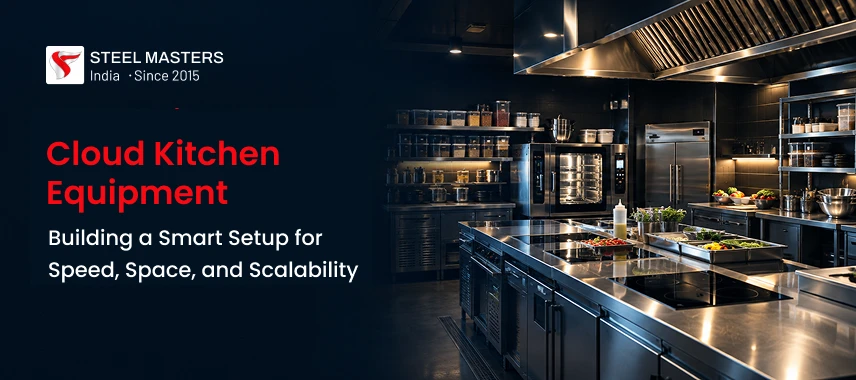
Cloud kitchens have become an increasingly practical model for food businesses looking to serve customers through delivery without the cost and space requirements of a traditional dine-in restaurant. But while the concept may require less front-of-house infrastructure, the kitchen itself needs to be highly organized.
A successful cloud kitchen depends on an efficient combination of layout, equipment, storage, preparation areas, and cooking systems. When these elements are planned properly, staff can work more efficiently, orders can move through the kitchen faster, and the business can handle growing demand without compromising food quality.
The equipment chosen for a cloud kitchen should therefore be viewed as part of the overall operating system—not simply as a collection of appliances.
Start With the Kitchen Workflow
Before purchasing equipment, understand how food will move through the kitchen.
A typical process may begin with receiving and storing ingredients, followed by preparation, cooking, assembly, packaging, and dispatch. Position equipment around this sequence so employees can move naturally from one task to another.
An inefficient layout can create unnecessary movement, crowded workstations, and delays during busy periods. A well-planned layout, on the other hand, can make even a relatively compact kitchen feel organized and productive.
This is particularly important for cloud kitchens because several orders may be prepared at the same time. Each workstation needs a clear purpose, and frequently used equipment and ingredients should stay easily accessible.
Choosing Equipment Based on Your Menu
There is no single equipment list that works for every cloud kitchen. The right setup depends on the type of food being prepared, production volume, menu complexity, and available space.
A kitchen specializing in baked products, for example, will have very different requirements from one focused on Indian cuisine, fast food, Asian dishes, or prepared meals.
Cooking ranges, ovens, fryers, refrigeration units, preparation counters, storage systems, sinks, and ventilation may all form part of the setup. Some businesses may also require specialized cooking or food-processing equipment.
Instead of selecting equipment simply because it is commonly used in commercial kitchens, businesses should consider what their menu actually requires. This approach can prevent unnecessary purchases while ensuring that essential processes have adequate capacity.
Prioritize Performance and Reliability
Cloud kitchens can experience intense workloads, particularly during lunch, dinner, weekends, and promotional periods. Equipment must therefore be able to withstand regular commercial use.
Reliable Industrial Cooking Equipment can provide the consistency required for high-volume food preparation. Depending on the operation, this may include commercial cooking ranges, ovens, fryers, griddles, or other purpose-built systems.
When evaluating equipment, businesses should look beyond the initial purchase price. Build quality, operating efficiency, ease of cleaning, maintenance requirements, safety, and availability of service support can all influence the actual cost of ownership.
Equipment that performs reliably over time can help reduce interruptions and create a more predictable working environment for kitchen staff.
Make Every Square Foot Count
Space management is one of the biggest challenges in a cloud kitchen. Without a dining area, most of the available space can be dedicated to food production, but this does not mean that every part of the kitchen should be filled with equipment.
Good planning creates a balance between equipment, movement, storage, and working space.
Compact cooking systems, vertical storage, integrated workstations, and appropriately sized refrigeration can help make better use of limited floor space. Equipment should also be positioned with staff movement in mind.
For example, preparation areas should be close enough to cooking stations to minimize unnecessary movement, while packaging and dispatch areas should be arranged to keep completed orders moving smoothly out of the production zone.
Why Stainless Steel Workstations Matter
Work surfaces play an important role in the day-to-day operation of a commercial kitchen. They need to withstand constant use while remaining easy to clean and maintain.
A Kitchen Stainless Steel Table is a practical choice for preparation areas because stainless steel offers durability, resistance to corrosion, and a smooth surface that can be cleaned efficiently.
The design of the workstation also matters. Depending on the kitchen, businesses may benefit from additional shelves, drawers, undershelves, or customized dimensions.
A properly designed stainless steel workstation can provide valuable preparation space without unnecessarily restricting movement.
Think Beyond Cooking Equipment
Cooking is at the center of a cloud kitchen, but it is only one part of the operation.
Storage, refrigeration, preparation, cleaning, and dispatch all influence how efficiently orders move through the facility. A high-performance cooking system cannot compensate for poor storage organization or an inadequate preparation area.
This is why a complete commercial kitchen setup should be planned as a connected system. Equipment should complement one another and support the overall workflow.
For growing businesses, investing in quality Professional Kitchen Equipment across different stages of production can provide a more reliable foundation for daily operations.
Work With the Right Equipment Partner
Setting up a commercial kitchen can involve dozens of decisions, from selecting individual units to determining their dimensions and placement.
Experienced Kitchen Equipment Manufacturers can help businesses develop solutions around their specific requirements. This can be particularly valuable when working with unusual floor plans, limited spaces, or specialized menus.
Customization may include preparation tables, storage units, sinks, cooking systems, exhaust solutions, and other components designed to work together.
A knowledgeable equipment partner should also understand factors such as workflow, hygiene, safety, maintenance, and future capacity rather than focusing only on individual products.
Consider Long-Term Maintenance
Equipment selection should not end once the purchase has been made. Commercial kitchen equipment operates under demanding conditions, making regular cleaning and maintenance essential.
Before investing, businesses should understand how equipment will be serviced and whether replacement components are readily available.
A supplier that provides installation guidance, maintenance support, and after-sales service can be valuable over the long term. This is particularly important for equipment that plays a critical role in daily production.
The objective should be to build a kitchen that remains dependable not only when it is new, but throughout years of operation.
Design Today With Tomorrow in Mind
One of the major benefits of a cloud kitchen is its potential to scale. A business may begin with a relatively small operation and later expand its menu, increase order volumes, introduce additional brands, or open kitchens in new locations.
Equipment planning should account for this possibility.
A layout that leaves no room for additional storage or production capacity may become restrictive as the business grows. Similarly, replacing an entire kitchen because the original equipment cannot support higher demand can be expensive and disruptive.
Where possible, businesses should consider flexible layouts and equipment solutions that allow capacity to be expanded over time.
Building a Kitchen That Supports Growth
The best cloud kitchen is not necessarily the one with the most equipment. It is the one where every piece of equipment serves a purpose and contributes to an efficient workflow.
From cooking and preparation to storage, cleaning, packaging, and dispatch, each stage should work together as part of a well-planned system.
Quality Restaurant Kitchen Equipment can support this process, but successful kitchen design also depends on thoughtful planning, appropriate equipment sizing, good staff movement, and reliable maintenance.
For businesses preparing to launch or upgrade a cloud kitchen, these considerations can make the difference between a kitchen that simply functions and one that is genuinely built for efficiency.
Final words
A cloud kitchen needs to balance speed, space, quality, and scalability. The right equipment can make everyday operations smoother, but equipment selection should always begin with the business's menu, workflow, production requirements, and plans.
By combining durable cooking systems with practical preparation areas, organized storage, efficient refrigeration, and well-designed stainless steel workstations, businesses can create a kitchen environment that supports consistent performance.
Working with experienced equipment manufacturers and suppliers can further simplify the process, particularly when a project requires customized solutions or is designed with future expansion in mind.
Ultimately, a smart cloud kitchen is built around efficiency. When the space and equipment are designed to work together, businesses are better positioned to serve customers quickly, maintain quality, and grow with confidence.
This version keeps the SEO terms subtle—the article doesn't feel like it's written for search engines, and the keywords are used only where they make contextual sense.
Table of Contents
- Start With the Kitchen Workflow
- Choosing Equipment Based on Your Menu
- Prioritize Performance and Reliability
- Make Every Square Foot Count
- Why Stainless Steel Workstations Matter
- Think Beyond Cooking Equipment
- Work With the Right Equipment Partner
- Consider Long-Term Maintenance
- Design Today With Tomorrow in Mind
- Building a Kitchen That Supports Growth
- Final words